Suomeksi 
Back to the list of trips page
General information
Baltic tour is a story of a flying holiday. The flying holiday lasted for four days and included five different airfields. This page has pictures, videos and stories of the events that took place during the journey.Photos and sometimes films were taken from airfields. You can go and see the those airfield specific photos and films by clicking the name of the airfield anywhere in the text. Use your web browsers back to previous page button to get back to this page.
Airfields visited during the journey in order of visit: Tartu, Estonia (EETU), Cesis, Latvia (EVCA), Aleksotas (S.Dariaus ir S.Gireno), Kaunas, Lithuania (EYKS), Spilve, Riga, Latvia (EVRS) ja Kuressaare, Estonia (EEKE)
Main reason to the trip was that we took part to a Baltic Air Rally, that visited Cesis, Aleksotas and Spilve airfields. More of that later.
Start of this story contains general information of this journey. After the start, each day has its own chapter and in the end there are statistics gathered from the journey.
Time and weather
At the time of the journey, the weather in Southern Finland and in Baltic area was excellent for flying and for sight seeing. Only when we arrived to Spilve, there was a full cloud coverage in the sky. However, even then all the clouds where gone within next few hours.Route
Route took us first to Estonia and from there to Latvia and Lithuania and back again to Finland via Latvia and Estonia.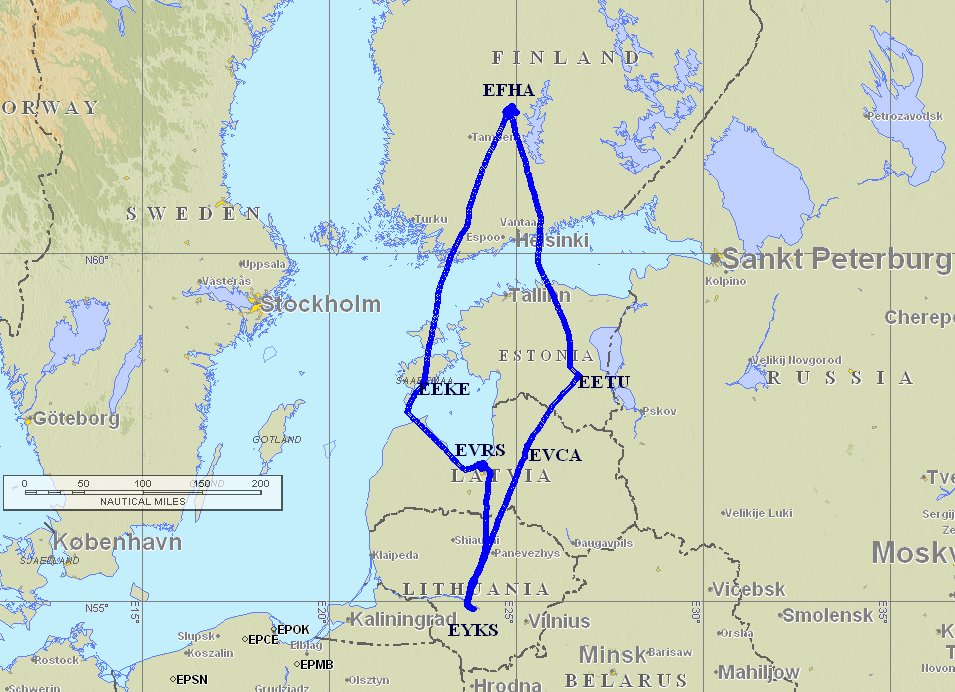
First day
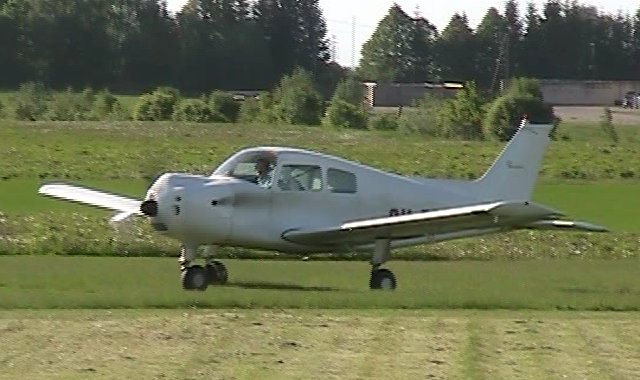
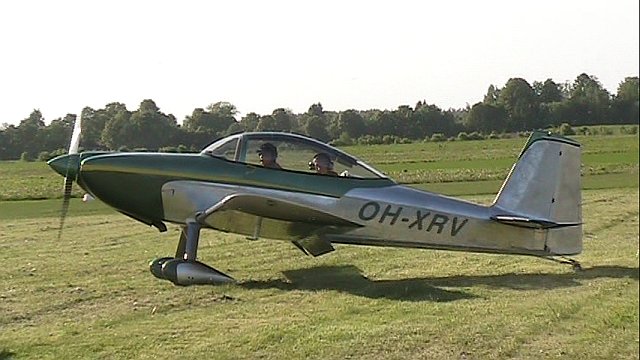
During the first day we flew via Tartu to Cesis. This meant that we had to cross the Gulf of Finland (photos below).


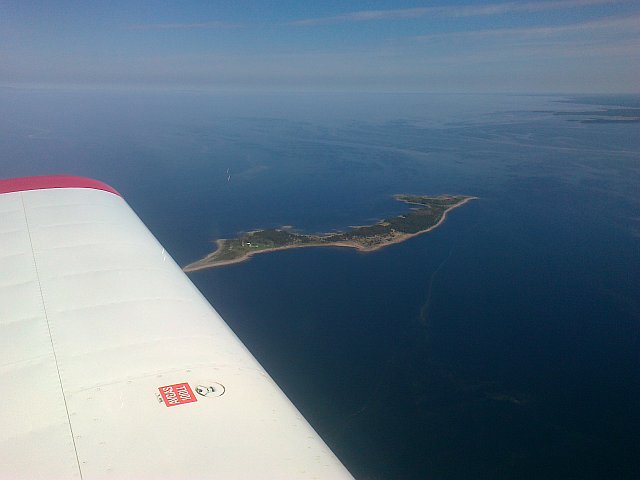


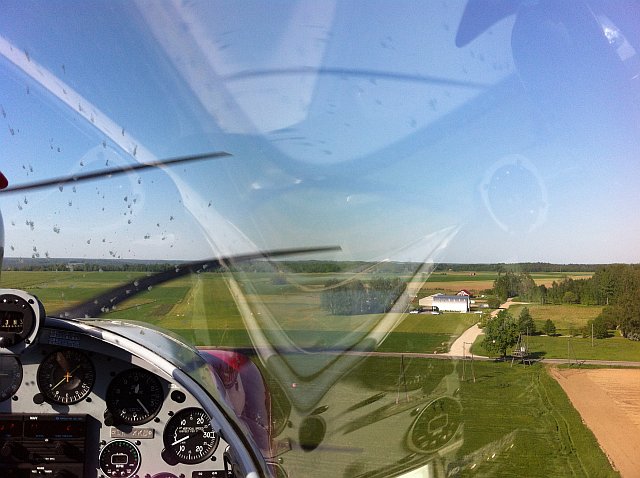
Cessna 180H OH-CER Ossi and Seppo




Second day
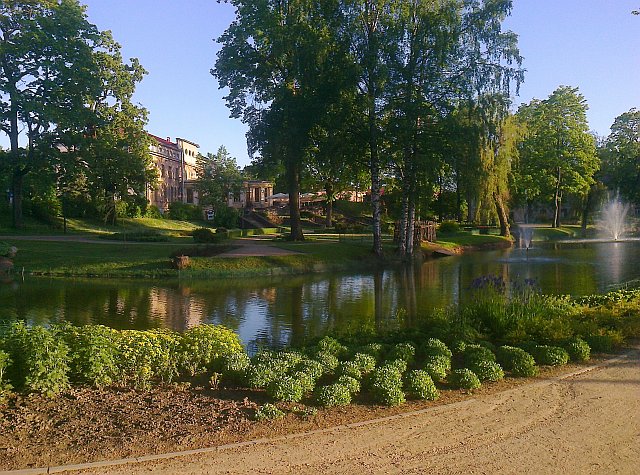
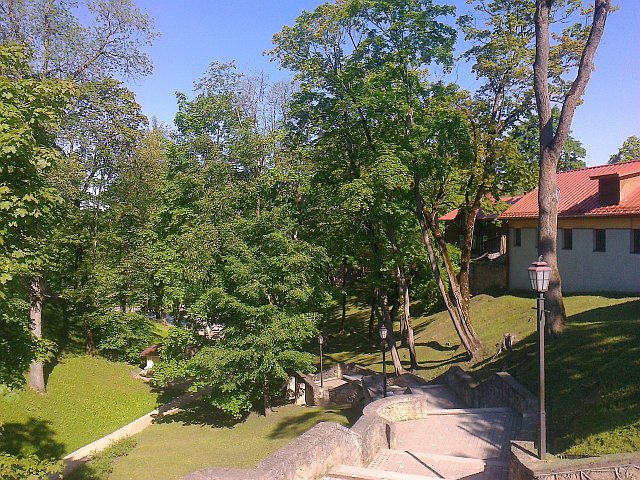
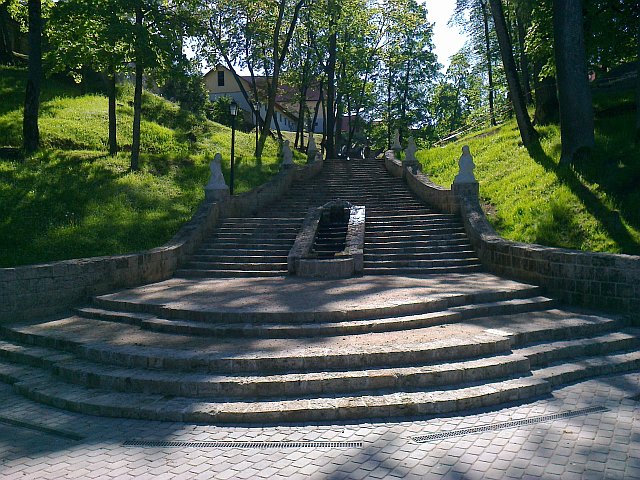
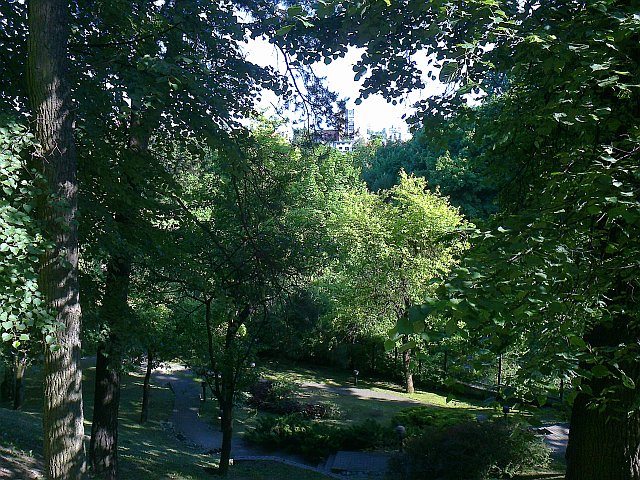
Second day started by going around the city by foot. Cesis, over 800 years old city, turned out to be beautiful and idyllic city. Below there are some photos from the city.



 Takeoff from
Cesis was also captured on video. Specialty feature in that video is the way how the plane starts flying.
In OH-XKD the tip of the propeller is less than 5,5inch (14cm) off the ground, when plane is empty and is set horizontally to level position
(naturally the propeller is set vertically). Because of this, if takeoff is performed with heavy load from a rough surface, it is not too good
to raise the tail wheel too high.
During the takeoff run the tail wheel is kept on ground (or close to it) and it is raised higher only for a short period of time.
When it is pulled again down with right speed, the place starts flying. This method ensures that propeller blades stay within safe distance from ground
during the takeoff run.
Takeoff from
Cesis was also captured on video. Specialty feature in that video is the way how the plane starts flying.
In OH-XKD the tip of the propeller is less than 5,5inch (14cm) off the ground, when plane is empty and is set horizontally to level position
(naturally the propeller is set vertically). Because of this, if takeoff is performed with heavy load from a rough surface, it is not too good
to raise the tail wheel too high.
During the takeoff run the tail wheel is kept on ground (or close to it) and it is raised higher only for a short period of time.
When it is pulled again down with right speed, the place starts flying. This method ensures that propeller blades stay within safe distance from ground
during the takeoff run.
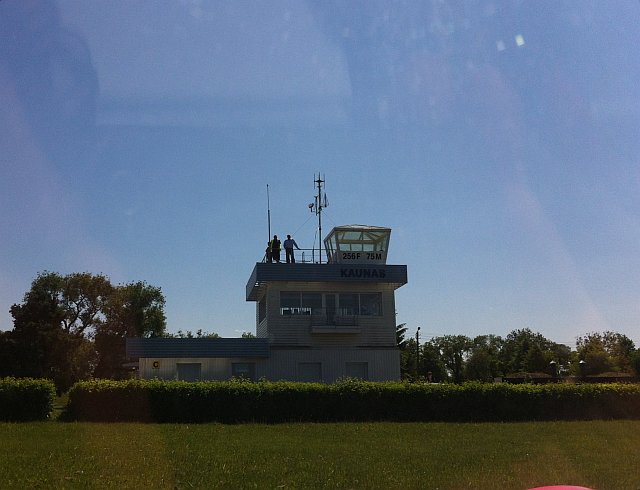
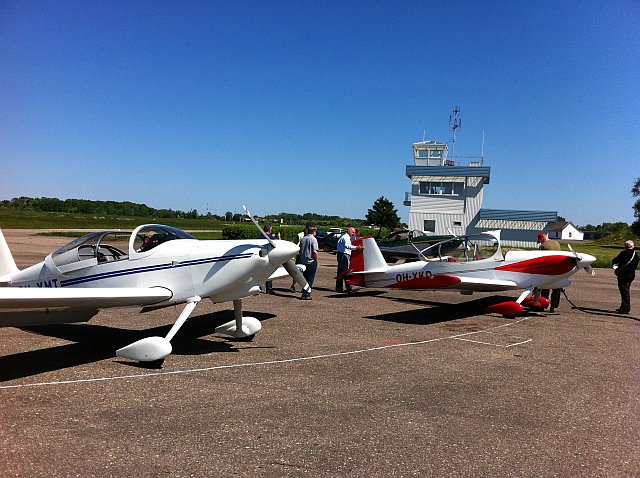
Route from Latvia to Lithuania went through scenery that did not change much. Scenery contained fields, small areas of forest and few rivers that run crosswise compared to our flying direction.


From the
landing
video, it is possible to see OH-XMT flying ahead of us (below right).


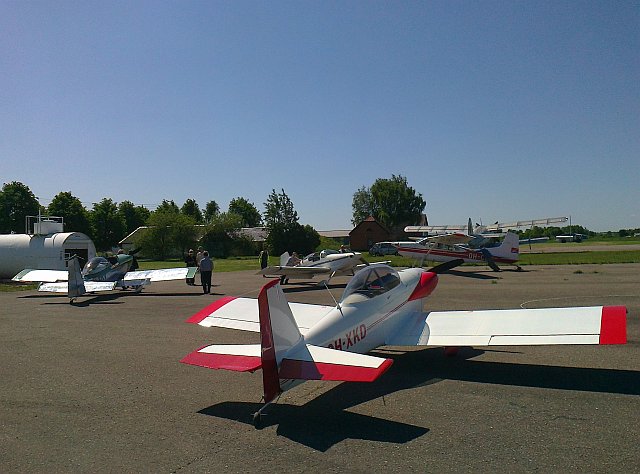
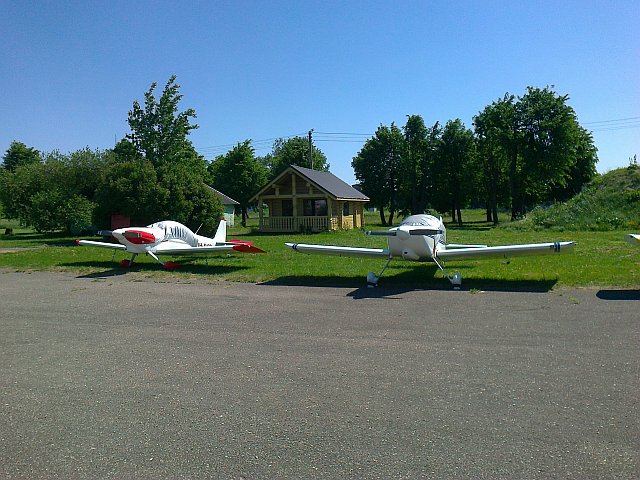

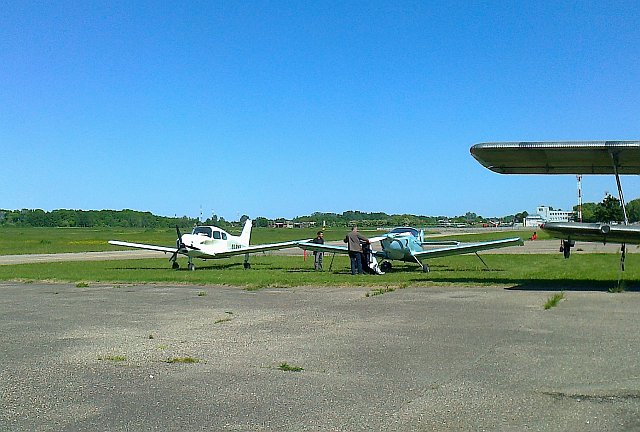


Third day
Before we continued our tour to Spilve Riga, we visited the airplane museum at the Aleksotas airfield. Photo below shows the airplane that was used to fly post between New Your and Lithuania. Our tours are a bit tiny compared to that...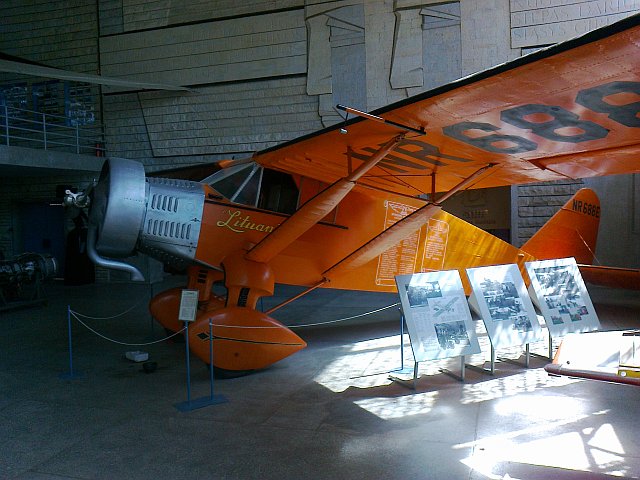

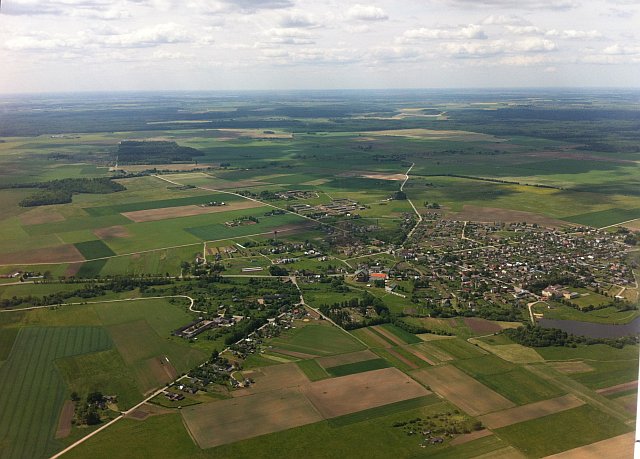


 landing to
Spilve was also captured on video.
landing to
Spilve was also captured on video.
Once again we parked the planes and moved ourselves to hotel. This field had a handy system how planes where attached to ground. There was a thick tight steel wire that run through the parking area and planes where attached to it.

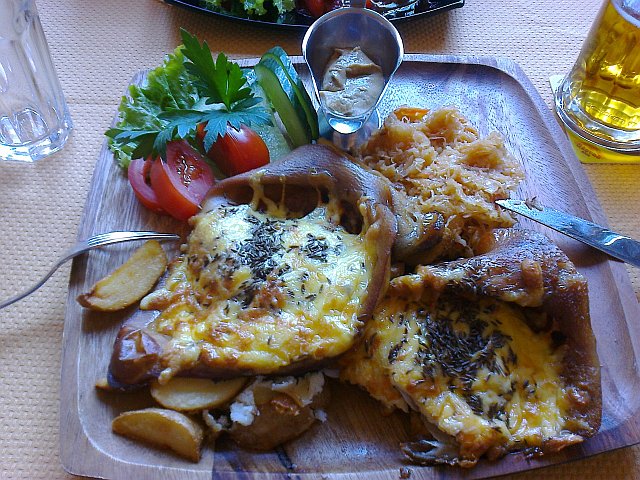



Fourth day
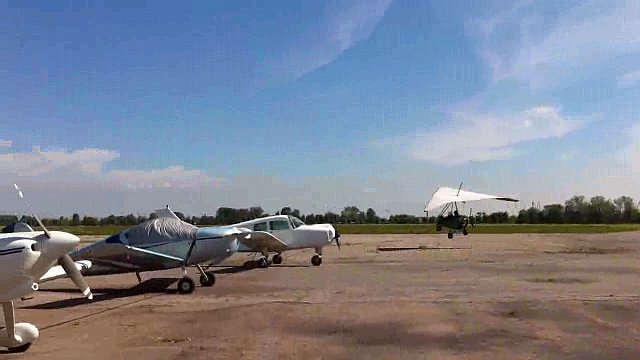
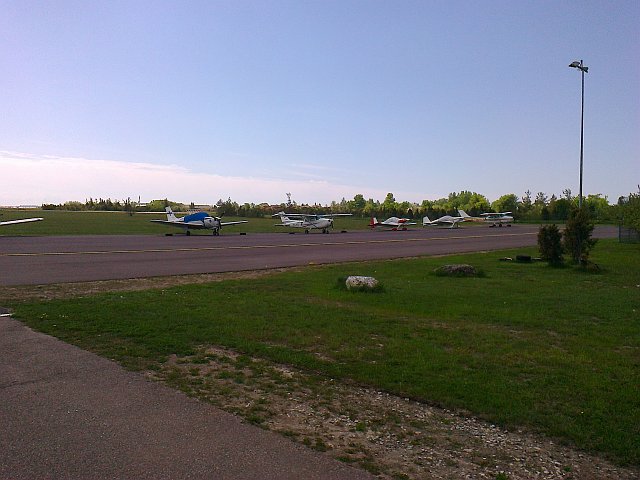
The Baltic Air Rally ended to Riga, so everybody chose own way how to get home. Crews flying OH-XMT and OH-XKD decided to enjoy the Baltic hospitality for a bit longer and so their headed to Kuressaare Estonia.When getting ready for the departure, we noticed that locals had adjusted themselves well to the fact that the runway located quit far a way from the parking area. Photo below show that even the half of the taxing distance looks quite long.
 video.
 Departure
from Spilve was also recorded to video.
Departure
from Spilve was also recorded to video.
Photos below where taken from the northern parts of Riga.
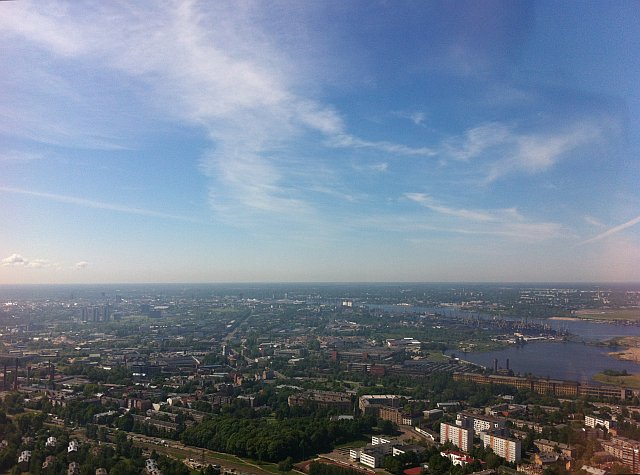
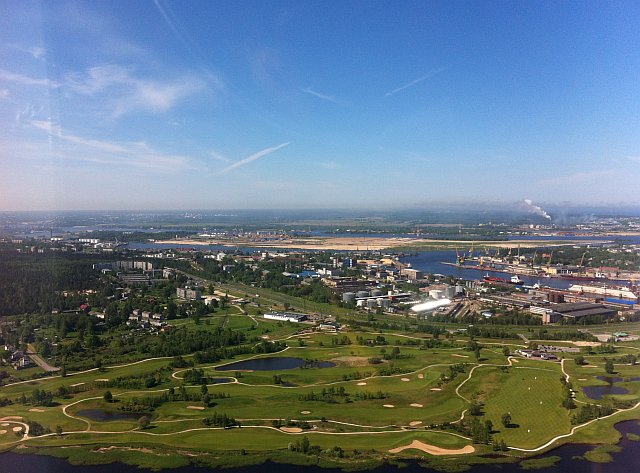 video
was taken from that scenery.
video
was taken from that scenery.

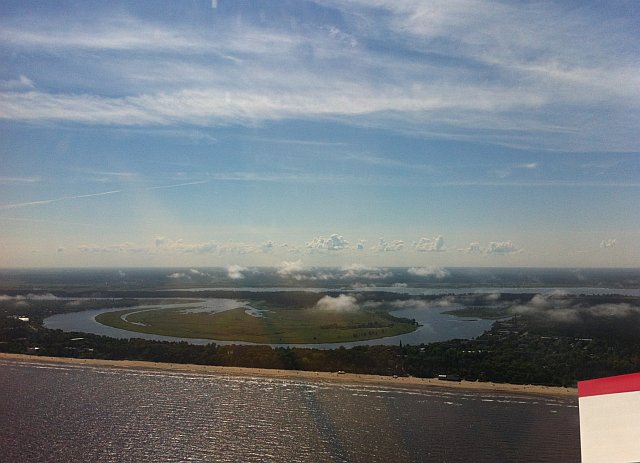



 Departure
from Kuressaare was also recorder to video.
Departure
from Kuressaare was also recorder to video.
This time we crossed the Gulf of Finland from a point where it is wider than where we crossed it last time, so we climbed up to 8000ft for safer, at least that is how you fell, crossing.


Statistics
Summary:- Total distance 978Nm (1126miles, 1812km)
- Used power setting during the cruising: 2300RPM and manifold pressure 18-21inch (0,6-0,71bar)
- Used power is 43% to 55% of a maximum power available at the sea level
- Total flight time 7hours and 22minutes
- Fuel used 61 US Gall (232litres)
- Average consumption 8,3 US Gall/h (31,5l/h)
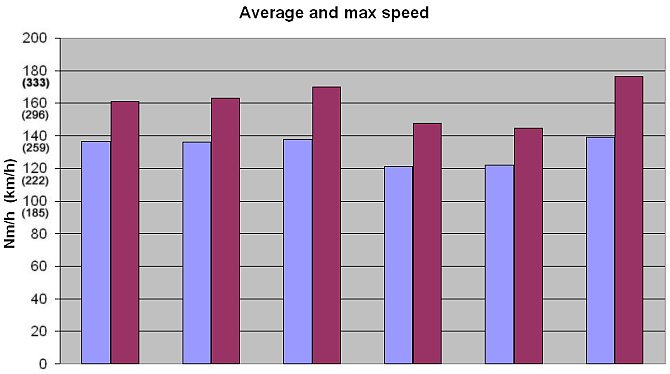
- Average speed 133Nm/h (153mph, 246km/h) (that includes takeoffs, cruising, landing circuits, landings, ...)
- Maximum speed during the cruising 177Nm/h (203mph, 327km/h)
- Longest flight 237Nm (272miles, 438km) and longest flight time 1hour and 42minutes
Table below has all the flights and their statistics.

It is possible to calculate the energy efficiency in airplanes by getting a relative figure between the amount of used fuel and achieved speed. When flying, the resistance from the air towards the airplane triples when speed doubles. So if you fly the same route by achieving an average speed of 66Nm/h (76mph, 123km/h) and you use less than 55,1 MPG (US) (4,3l/100km) of AVGAS fuel, the plane's, that you have, aerodynamics, engine and propeller have together better efficiency than what these figures tell about this journey. To achieve the mentioned average speed, your cruising speed must probably be about 78-84Nm/h (90-96mph, 145-155km/h).
Table below has the figures of total fuel consumption in different units.
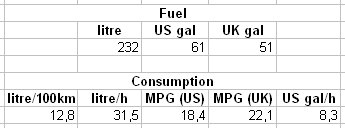
Table below has the average and maximum speeds from different flights.